
The Development Corporation is looking for investors ready to build grain terminals in Astrakhan
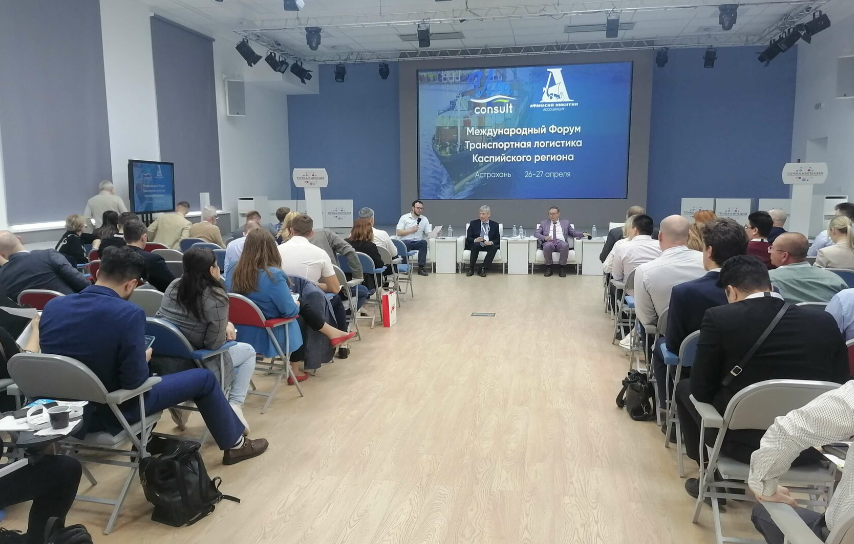
To this end, the specialists of the joint-stock company visited the international forum "Transport Logistics of the Caspian region 2024". The event started last Tuesday. Dozens of business representatives, leading Russian and international associations and unions, regional government authorities, SEZs of the Caspian countries took part in it.
The third International Forum is an annual platform for professionals in the transport and logistics industry, cargo owners and leading experts from Russia, Iran, India, Kazakhstan, Azerbaijan, Turkmenistan and other foreign countries. The agenda includes key issues of the transport and logistics ecosystem and cargo base of the Caspian macroregion and the international transport corridors of Greater Eurasia in a global context.
The forum discussed the cargo base of the Caspian transport and logistics hub, export and import volumes, forecasts for the growth of its own and transit cargo base, assessment of cargo potentials in 2024-25, the network of transport corridors in the region, new directions, as well as the formation of a single transport and logistics space of the Caspian hub.
One of the main topics was the actualization of the international North-South channel. Now this area is becoming even more relevant due to the increasing instability of the usual supply channels through the Black Sea and the Baltic. The stability of supplies using the North-South MTK is due to the system of regional stability guaranteed by the Caspian littoral States.
The participants of the event also touched upon the topic of cargo transportation.
According to the forum participants, in 2023, according to statistics, the volume of cargo transportation increased by 38-40%. Astrakhan ports provided the main volume of cargo turnover.
The development of not only the sea channel, but also new railway routes (from Astrakhan to Dagestan, then to Azerbaijan and Iran), as well as the prospects for cargo transportation using road transport were discussed. As for the latter: we are talking about the R-22 Caspian highway (M6). Namely, about the sections from 1331 to 1338 km and from 1340 to 1348 km in the Narimanovsky district, passing through the village of Volzhskoye and the city of Narimanov, as well as from 1101 to 1103 km in the Chernoyarsk district near the village of Staritsa. Moreover, the first of these segments will be put into operation this year. On sections with a total length of 17 km, traffic will become four-lane.
This is not just a repair that is carried out at different sites every year. The plot in the Narimanovsky district is the entrance to the Lotus GCC and the special economic zone of the same name.
According to Denis Mishchenko, an investment attraction specialist at the Development Corporation, the Corporation faces the task of attracting investors to projects to create new grain transshipment facilities in the region to ensure a stable, alternative channel for the supply of products from the Russian agro-industrial complex to the countries of the Caspian basin and far abroad.
"Today, a number of large grain exporters consider the North-South agro-Industrial Complex as a promising supply channel for agro-products to the markets of Asia and Africa. The Astrakhan Region Development Corporation is ready to provide comprehensive assistance in the implementation of their plans in our region," Denis Mishchenko said.
The construction of new facilities for the storage and transshipment of grain and oil is one of the priorities for the development of the port complex of the Astrakhan region. In the second half of 2023 alone, several new projects have been launched to create grain and oil transshipment points, and some of them have already been awarded the status of a particularly important investment project. The potential consumption capacity of the export grain and oil market from Russia is several times higher than the volume of the current supply.
.png)
